One of the first confusing things newbie humor writers discover is that people often laugh at situations that, objectively speaking, suck.
Someone slips on ice.
Someone trips on the steps.
Someone walks into a glass door.
People laugh.
The reaction seems strange at first. Falling hurts. Embarrassment hurts. Yet audiences routinely laugh when minor disasters happen to someone else.
The reason is surprisingly simple.
Pain is funny.
Well… not all pain.
Comedy works when the pain is small, temporary, and survivable. When the stakes are low, the audience experiences the moment as harmless surprise rather than genuine suffering.
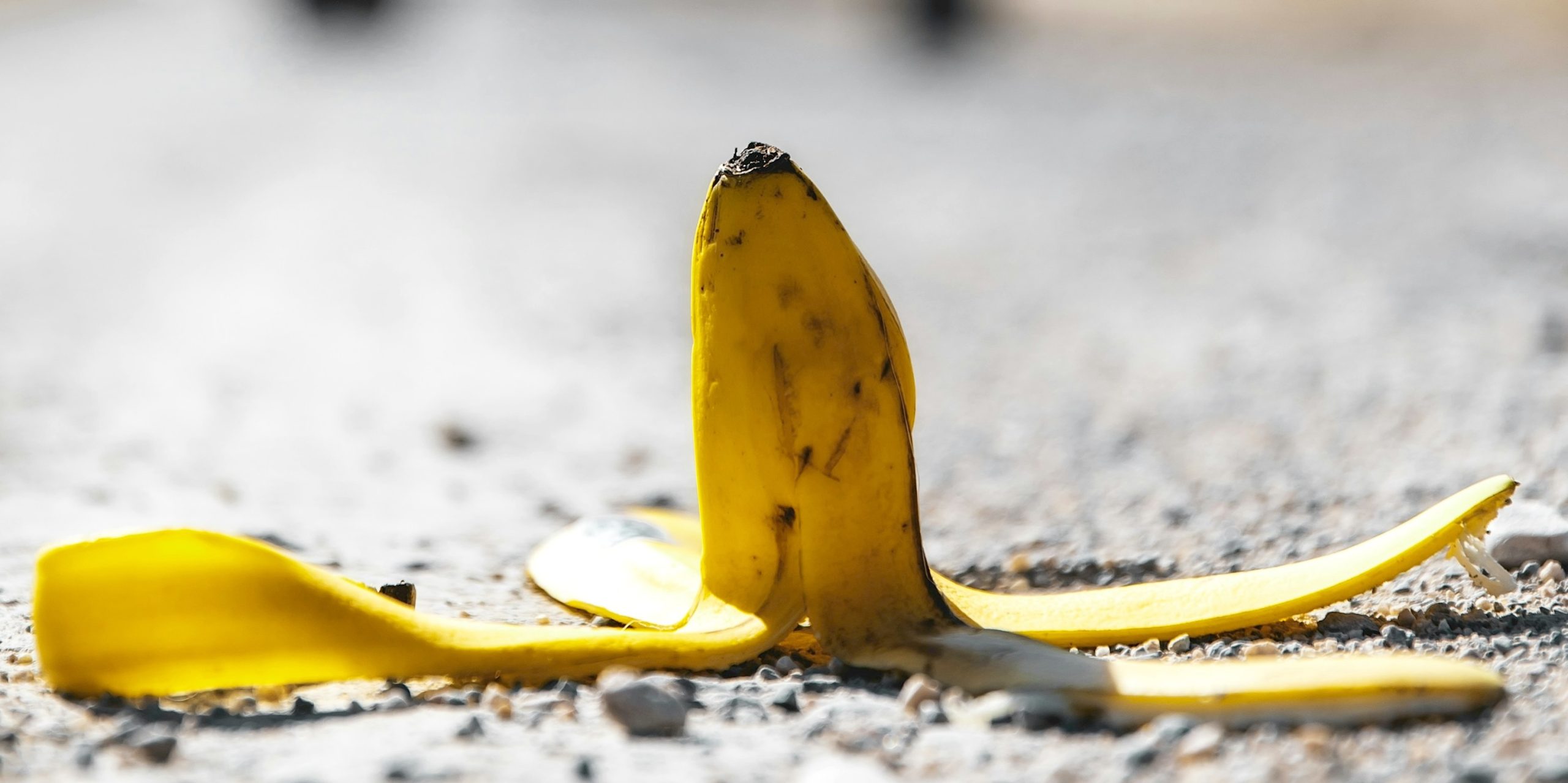
If a person slips on a banana peel and immediately stands up, people laugh.
If that same person falls, breaks a hip, and screams in pain, the comedy disappears instantly.
The difference is perceived consequence.
Humor lives in situations where something unexpectedly goes wrong, but the audience knows everything will be fine.
That’s why so much comedy involves embarrassment, frustration, and inconvenience rather than real tragedy.
The character spills coffee on themselves.
They wave back at someone who wasn’t waving at them.
They confidently push a door that clearly says pull.
None of these moments are pleasant for the person experiencing them. But they’re small enough that others feel safe laughing.
Humor writers use this principle constantly.
Sitcom characters make fools of themselves – literally every comedy show has an “idiot.”
Stand-up comedians describe awkward personal disasters. Some performers even push the boundary with jokes about death or grief.
Cartoons exaggerate physical mishaps that would be catastrophic in real life.
The key is that the audience senses the situation is safe.
Without that safety, the laughter disappears.
Something important changes in the audience’s reaction.
Instead of relating to the moment, the audience starts worrying about the person experiencing it.
For humor writers, the lesson is simple.
Funny often begins when something goes wrong.
But the consequences must stay small enough that readers can laugh with—or at—the character instead of feeling sorry for them.
Because humor depends on a subtle psychological shift.